Quick answer: Do you need a permit for an ACT trade promotion?
An ACT trade promotion is a free-entry competition run to promote a business, product, or service where winners are determined by chance or skill. In the Australian Capital Territory, a permit is required for games of chance when the total prize pool exceeds $3,000, regulated by the ACT Gambling and Racing Commission under the Lotteries Act 1964.
TL;DR – what you'll learn in this guide
-
Permit required for games of chance with a total prize pool over $3,000
-
No permit required for games of skill
-
ACT permit approval typically takes 3–5 business days
-
Competition terms must comply with ACT requirements and Australian Consumer Law
-
Winner publication is required for prizes valued at $1,000 or more
-
Unclaimed prize draw obligations apply after the promotion closes
-
Multi-state promotions require separate permits across applicable jurisdictions
About this guide
This 2026 guide explains how ACT trade promotions work, when a permit is required, how to distinguish between games of chance and games of skill, what must be included in your competition terms, advertising compliance requirements under Australian Consumer Law, and how to manage record-keeping, winner notification, and unclaimed prize draw obligations. It also covers multi-state promotion risks and how enterprise legal teams can streamline compliance approvals and reporting to avoid becoming a bottleneck for marketing campaigns.
What is an ACT trade promotion? (2026 definition & legal framework)
A trade promotion is a free-entry competition conducted by a business to promote the sale of goods or services. The free element is what legally distinguishes a trade promotion lottery from a standard lottery or raffle which is entrants must not be required to pay to enter. This distinction is fundamental: if a purchase or payment is required to participate, the promotion is no longer a trade promotion under ACT law and will be subject to different and more restrictive regulations.
In the Australian Capital Territory, trade promotions are commonly used by retailers, financial services providers, FMCG brands, and marketing teams to drive consumer engagement, reward customers, or support product launches. The format may include instant win mechanics, prize draws, random draws, or skill-based competitions judged on merit.
For legal teams supporting marketing functions, understanding the legislative framework governing these promotions is essential. Non-compliant conduct can expose a business to regulatory penalties, campaign delays, and reputational risk, all of which compound significantly when running a national promotion across multiple states.
Game of chance vs game of skill

The most important classification in ACT trade promotion law is whether a competition is a game of chance or a game of skill. The selection method determines whether a permit is required and how the promotion must be conducted.
A game of chance is one where winners are determined by random selection, for example, a random draw from all valid entries, a prize draw using an automated system, or any instant win mechanic based on luck. These promotions require a permit in the ACT when the total prize value exceeds $3,000.
A game of skill is one where winners are chosen based on merit, for example, answering a question correctly, submitting a creative entry, or satisfying clearly defined judging criteria. In a genuine game of skill, luck plays no material element in determining the outcome. These competitions generally do not require permits in the ACT.
The risk of misclassification is significant. Many businesses mistakenly treat a promotion as a game of skill when it contains elements of luck, or fail to define judging criteria with sufficient precision in the competition terms. If a promotion is later found to be a game of chance, the business may face penalties for conducting an unlicensed lottery.
Example: A promotion inviting entrants to submit a photo and vote for the winner is likely a game of skill if judged by a panel against stated criteria. However, if the winner is selected by random draw from all photo submissions, it becomes a game of chance and an ACT permit will be required if the total prize pool exceeds $3,000.
Legislative framework in the ACT
Trade promotion lotteries in the Australian Capital Territory are regulated under the Lotteries Act 1964 (ACT). The ACT Gambling and Racing Commission administers the legislation, issues permits, and can investigate complaints and non-compliant conduct.
In addition to ACT-specific legislation, all promotions must comply with Australian Consumer Law (ACL), contained within the Competition and Consumer Act 2010 (Cth). The ACL governs how promotions are advertised, how prize details and entry requirements are communicated, and prohibits misleading or deceptive conduct in the promotion of prizes.
Businesses operating in multiple states must also account for state and territory legislation in NSW, VIC, QLD, SA, and WA, each with its own rules on when permits are required, how fees are calculated, and what ongoing compliance obligations apply once a promotion is approved.
"Legal teams supporting marketing functions increasingly need to move fast without cutting corners. The challenge is not just knowing the rules, it's building the operational infrastructure to apply them consistently across every campaign, in every state, every time."
Terms and conditions requirements for ACT trade promotions
Compliant terms and conditions are not optional, they are a prerequisite for ACT permit approval and a core component of your legal obligations under both the Lotteries Act 1964 and Australian Consumer Law. Poorly drafted competition terms are one of the most common reasons promotions are delayed or flagged as non-compliant.
Mandatory clauses
Your competition terms must include, at minimum:
-
Eligibility criteria — who can enter, including age restrictions and any geographic limitations
-
Entry method — a clear description of how entrants submit entries and what the entry requirements are
-
Draw or judging process — whether the winner is determined by random selection or judged based on stated judging criteria, and the draw date
-
Prize details — a full description of each prize, its total prize value, and any conditions attached to prize fulfilment
-
Winner notification — the process and timeframe for notifying winners (within 21 days of the draw or judging)
-
Winner publication — for prizes of $1,000 or more in total prize value, results must be published on the promoter's website or in an approved publication
-
Unclaimed prize draw — provisions for what happens when a prize is not claimed within the specified period, including an unclaimed prize draw if required
-
Privacy obligations — how entrant data will be collected, stored, and used, consistent with the Privacy Act 1988
Advertising compliance under Australian Consumer Law
Beyond the competition terms themselves, all advertising and promotional materials must comply with Australian Consumer Law. The ACL prohibits misleading or deceptive conduct in the promotion of competitions, which includes:
-
Misleading prize values — prizes must be represented at their genuine retail value; inflating prize values to make a competition appear more attractive is a breach
-
False scarcity — claiming prizes are limited when they are not, or suggesting that entry windows are closing when they are not
-
Clear closing dates — all advertising must clearly state the promotion end date and draw date
-
Responsible alcohol messaging — if alcohol is used as a prize, all advertising must comply with applicable alcohol advertising standards and clearly state age restrictions
Many businesses also run promotions that span digital, social, and out-of-home channels, each of which may be subject to additional platform-specific rules on top of the ACL obligations.
Multi-state trade promotions: why ACT compliance is only part of the risk
Running a trade promotion that is open to residents of more than one state is where compliance complexity escalates rapidly. A national promotion requires businesses to comply with every applicable jurisdiction's rules, not just those of the Australian Capital Territory.
Key differences across states and territories
|
State/Territory
|
Permit required?
|
Threshold
|
Key notes
|
|
ACT
|
Yes (chance only)
|
Over $3,000
|
Regulated under Lotteries Act 1964; 3–5 business day approval
|
|
NSW
|
Yes (chance only)
|
Over $5,000
|
Administered by Liquor and Gaming NSW; separate permit per promotion
|
|
VIC
|
No
|
No threshold
|
Must comply with Australian Consumer Law; compliant T&Cs required
|
|
QLD
|
Yes (chance only)
|
Over $5,000
|
Administered by Office of Liquor and Gaming Regulation; notification obligations apply
|
|
SA
|
Yes (chance only)
|
Over $5,000
|
SA permits issued by Consumer and Business Services; separate SA-specific requirements
|
|
WA
|
No
|
No threshold
|
No permit process; ACL compliance and compliant T&Cs mandatory
|
For a national promotion, businesses may need to apply for permits in the ACT, NSW, QLD, and SA simultaneously, each with its own application process, fees, and timeline. Failing to require permits in all applicable jurisdictions creates regulatory exposure in each state where the promotion runs.
Governance risks for enterprise organisations
For growth-stage enterprises running multiple promotions each year, the operational risks extend well beyond the permit application itself. Legal teams must manage cross-team approvals across marketing, legal, and compliance functions; maintain documentation control over terms and conditions, permit correspondence, and winner records; and ensure audit readiness in the event of a regulatory inquiry.
Record retention obligations mean that many businesses need to hold promotion records, including entry logs, draw records, winner communications, and prize fulfilment documentation, for an extended period after the promotion closes. Without a centralised system, this documentation is often scattered across email threads, shared drives, and individual marketing team members' files.
The result is a governance risk that is easy to underestimate until a complaint is received or a regulator comes knocking.
Operationalising compliance: a scalable framework for legal teams
For legal teams managing high volumes of trade promotions across a national business, the challenge is not just knowing the rules , it is building the operational infrastructure to apply them consistently, at speed, without becoming a bottleneck for the marketing teams they support.
Workflow automation for promotion approvals
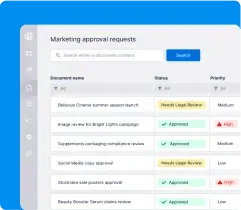
A scalable compliance framework for trade promotions should include centralised request intake, so that every new promotion is captured in a single system from inception. Legal review workflows ensure that the right team members review and approve each promotion in sequence, with clear ownership and accountability at every stage. Approval tracking provides visibility into where each promotion sits in the approval process, and automated reminders ensure that time-sensitive permit applications and draw dates are never missed.
This kind of workflow infrastructure reduces the risk of promotions launching without the required approvals and dramatically cuts the time legal teams spend chasing status updates across email.
Audit trails & reporting
An effective compliance framework also requires comprehensive audit trails. Entry logs, draw records, winner communications, and prize fulfilment documentation should all be captured and stored in a single, accessible system. Compliance dashboards provide legal and risk teams with real-time visibility across all active and completed promotions, including permit status, outstanding actions, and upcoming draw dates.
"The businesses that get this right are those that treat trade promotion compliance not as a one-time legal task, but as a repeatable operational process. When you have the right systems in place, legal stops being the bottleneck and starts being the enabler."
Pricing & budget analysis
Direct costs (permit fees & administration)
ACT permit fees are calculated based on the total prize value of the promotion. For current fee schedules, consult the ACT Gambling and Racing Commission directly, fees are subject to change and are confirmed at the time of application. In addition to ACT fees, businesses running national promotions should budget for permit fees in NSW, QLD, and SA, which are each calculated separately based on the total prize pool and applicable state fee schedules.
Administration costs include the time required to draft compliant terms and conditions, complete application forms, correspond with regulators, and manage any required amendments to terms before approval.
Hidden costs (legal time, risk exposure, rework)
The less visible costs of trade promotion compliance include the legal team time spent reviewing and approving each promotion, managing multi-state permit applications simultaneously, and resolving issues that arise from non-compliant terms or missed permit requirements. Rework costs, amending terms, resubmitting applications, updating advertising materials can significantly exceed the initial permit fee when promotions are not structured correctly from the outset.
For enterprise organisations running dozens of promotions per year, the cumulative cost of managing compliance manually across spreadsheets, email, and disconnected systems is substantial. Investing in operational infrastructure that automates and centralises this work delivers measurable productivity gains and reduces legal risk exposure.
Decision framework: should you run an ACT trade promotion?
Use this framework to assess your compliance obligations before launching:
Your total prize pool is under $3,000: No permit is required in the ACT for a game of chance. You still need compliant competition terms, ACL-compliant advertising, and clear entry requirements. Confirm that no other state where the promotion runs requires permits at this prize level.
Your promotion is a game of skill: No ACT permit is required, regardless of prize value. Ensure your judging criteria are clearly defined in your terms, that winners are genuinely chosen based on merit, and that the selection method cannot be characterised as involving an element of chance.
Your prize pool exceeds $3,000 and involves random selection: An ACT permit is required. Begin your application process at least five business days before your planned launch, and confirm whether permits are also required in NSW, QLD, and SA based on your promotion's geographic scope.
You are running a national promotion: Map permit requirements across all states and territories before drafting your terms. Build in sufficient lead time to obtain all required approvals before your launch date, and ensure your compliance documentation and audit trail are in place before the first entry is received.

.svg)