Quick answer: Do you need a permit for an NSW trade promotion authority?
A NSW trade promotion authority is required when a trade promotion lottery has a total prize pool exceeding $10,000. Under the Community Gaming Act 2018 and Community Gaming Regulation 2020, businesses must obtain a duration-based authority (1, 3 or 5 years) before running qualifying promotions in New South Wales.
TL;DR – key NSW trade promotions rules
-
Authority is required if the total prize pool exceeds $10,000
-
Authorities are available for 1, 3 or 5 years
-
Notification is required at least 10 working days before the start date
-
Entry must be free (excluding ordinary communication costs)
-
Trade promotion terms must clearly outline the redraw and unclaimed prize process
-
Advertising must include the authority number (if applicable)
-
Certain prohibited prizes apply under the Community Gaming Regulation 2020
About this guide
This guide explains NSW trade promotion authority requirements, including when an authority is needed, how the $10,000 threshold works, notification timelines, advertising rules, redraw obligations and compliance risks. It also outlines how enterprise legal teams can manage multiple promotions under a duration-based authority while maintaining audit visibility and regulatory control. The goal is not just to meet minimum statutory requirements, but to operationalise compliance across marketing, legal and operations teams.
When is a trade promotion authority required in NSW?

Under the Community Gaming Act 2018, a trade promotion authority is required before any business runs a trade promotion lottery in New South Wales where the total prize pool meets the legislated threshold. The authority is required before the promotion commences, it cannot be obtained retrospectively.
Understanding the $10,000 prize pool threshold
A NSW trade promotion authority is required when the total prize value offered across a single promotion exceeds $10,000. This includes the retail value of all prizes combined cash, gift cards, products, experiences and any other prize details specified in the competition terms.
When calculating total prize pool value, businesses should include:
-
The retail market value of all prizes (not cost price)
-
The value of any bonus or runner-up prizes
-
The value of prizes offered across all entry methods (online, in-store, social media)
-
Any instant win components within the same promotion
Promotions with a total prize value at or below $10,000 do not require an authority, though they must still comply with Australian Consumer Law, general fair trading obligations, and best-practice competition terms including clear rules, closing dates, entry process details and winner notification procedures.
For national promotions running across multiple states, separate state-based rules apply. New South Wales requirements must be met for any promotion open to NSW residents, regardless of where the business is headquartered. Businesses operating in Western Australia should also note that WA maintains its own gaming control framework, which may require separate compliance steps.
Notification requirements (10 working days rule)
Once a trade promotion authority is in place, businesses must notify NSW Fair Trading at least 10 working days before the promotion commences. This notification must include:
-
The start date and closing dates of the promotion
-
The draw process and winner selection methodology
-
Prize details, including the maximum prize value
-
The authority number assigned to the business
-
Entry method and entry form details (if applicable)
Failure to notify within the required timeframe is a compliance risk, even where an authority is held. Legal teams managing multiple promotions should build notification lead times into their campaign approval workflows to avoid inadvertent breaches.
Advertising and authority number obligations
Where a trade promotion authority is required, the authority number must be included in all advertising materials for the promotion. This applies across all channels, digital, print, broadcast and social media.
The authority number must appear in the trade promotion terms and conditions and be clearly legible in any creative materials that reference the prize draw or prize details. Businesses running user generated content campaigns or social media competitions should ensure that platform rules and entry conditions also carry the required disclosures.
Technical compliance requirements under the Community Gaming Regulation 2020
Terms and conditions requirements
Every trade promotion lottery in NSW must have clearly documented promotion terms. The Community Gaming Regulation 2020 sets out specific inclusions that competition terms must address. These include:
-
The full name and contact details of the promoter
-
The start date and closing dates of the promotion
-
All prize details, including maximum prize value and any conditions attached to prizes
-
The entry process, entry method and any age restrictions
-
The draw process, including the date, time and location of the random draw
-
Winner selection criteria and winner notification process
-
The redraw process and procedure for unclaimed prizes
-
The authority number (where an authority is required)
-
Any written consent requirements for winner publicity
Promotion terms should also address prohibited prizes, the Community Gaming Regulation 2020 specifies categories of prizes that cannot be offered in NSW trade promotions, including tobacco products and certain financial instruments. Legal teams should review prize details against the prohibited list before finalising any competition terms.
Unclaimed prizes and redraw rules
One of the most commonly overlooked compliance obligations relates to unclaimed prizes. The Community Gaming Regulation 2020 requires that trade promotion terms clearly outline what happens when a prize winner cannot be contacted or declines to claim their prize.
Where a prize remains unclaimed after a reasonable steps period (typically defined in the promotion terms), the business must conduct a redraw. The redraw process must be documented and conducted in accordance with the original draw process and lottery rules. Records of the redraw must be retained as part of the promotion's record keeping obligations.
Businesses should specify a clear unclaimed prize timeframe, commonly 3 months after which the redraw will occur. This protects the organisation against later claims and satisfies the transparency obligations under consumer law.
Record-keeping and transparency obligations
NSW trade promotion operators are required to maintain records for each promotion run under their authority. Record keeping requirements include documentation of the draw process, winner selection, prize distribution, and any redraw events. These records must be retained for a minimum period following the close of the promotion.
This obligation is stricter in New South Wales than in some other Australian jurisdictions. In states such as Western Australia, trade promotion gaming activities may be subject to different record keeping frameworks. For businesses running national promotions, NSW's requirements should be treated as the baseline standard.
Enterprise compliance framework for managing NSW trade promotions
For enterprise organisations running high volumes of trade promotions across marketing, retail and digital channels, ad hoc compliance management creates material risk. A structured governance framework, rather than a per-promotion checklist is the appropriate operating model.
Governance & approval workflow
A well-designed approval workflow ensures that every trade promotion is reviewed and approved before it launches, with clear accountability at each stage:
1. Legal review — Confirm that the promotion structure triggers authority requirements, verify the total prize pool calculation, and assess compliance against the Community Gaming Act 2018 and Community Gaming Regulation 2020.
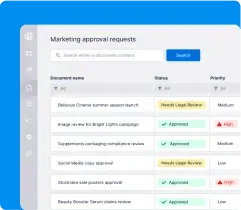
2. Marketing approval — Confirm that creative materials include the authority number, that promotion terms are accurate, and that advertising copy across all platforms — including social media and user generated content campaigns — meets disclosure obligations.
3. Authority validation — Verify that the existing authority covers the promotion period and prize pool value. Confirm that NSW Fair Trading has been notified at least 10 working days before the start date.
4. Documentation storage — Store all promotion terms, entry forms, draw process records, winner notification correspondence and unclaimed prize documentation in a centralised, auditable system.
Many businesses manage this process manually, which creates bottlenecks, version control risks and audit gaps — particularly when marketing teams are running multiple promotions simultaneously across different jurisdictions.
Multi-state risk considerations
For legal teams managing national promotions, NSW trade promotion compliance is only one component of a broader multi-jurisdiction framework. Australia does not have a single national promotion authority. Each state and territory maintains its own community gaming or gaming control legislation, with varying thresholds, notification requirements and record keeping obligations.
Key considerations for national promotions include:
-
NSW requires an authority for promotions with a total prize pool exceeding $10,000
-
Western Australia maintains its own gaming control framework and may require separate compliance steps
-
Queensland, South Australia, the ACT and the Northern Territory each have distinct rules that apply to free to enter competitions and chance promotions
-
Australian Consumer Law applies nationally and governs fair trading obligations, consumer protection standards and misleading conduct, regardless of state-based gaming requirements
"Enterprise legal teams running as many promotions as modern marketing calendars demand can't afford to treat compliance as a one-off task. Scalable systems — not spreadsheets — are what give you genuine audit visibility and compliance risk control across every campaign."
Pricing & budget analysis
Authority fees (1-year, 3-year, 5-year)
NSW trade promotion authority fees are set by the NSW Government and are payable to Service NSW at the time of application. Current fee schedules should be confirmed directly via the Service NSW Trade Promotion Gaming Authority application page, as fees are subject to periodic review.
|
Authority Duration
|
Approximate Fee
|
Best For
|
|
1 Year
|
Lower upfront cost
|
Businesses running occasional promotions
|
|
3 Years
|
Mid-range — cost efficient
|
Growing marketing programmes
|
|
5 Years
|
Highest upfront, lowest per-year cost
|
Enterprise organisations with ongoing promotion calendars
|
For enterprise organisations running multiple promotions per year, a 5-year authority typically delivers the best cost-per-promotion outcome and removes the administrative burden of renewal. The investment in a longer-duration authority is generally recovered quickly when weighed against the time cost of individual permit applications under the old system.
Cost of non-compliance
Operating a trade promotion lottery in NSW without the required authority, or failing to meet notification and record keeping requirements, exposes businesses to regulatory enforcement action by NSW Fair Trading. Penalties under the Community Gaming Act 2018 can include significant fines and, in serious cases, reputational damage through public enforcement action.
Beyond direct penalties, compliance risk materialises in other ways: prize disputes from participants, consumer protection complaints under Australian Consumer Law, and cross-functional friction when marketing teams proceed with campaigns that legal hasn't cleared. For enterprise organisations, a single enforcement action or public complaint can cost far more than the investment in a robust compliance system.
Management & workflow features for legal teams
Organisations managing trade promotion compliance at scale need more than a checklist, they need operational infrastructure. This is where AI-powered legal operations platforms provide meaningful leverage.
Centralised t&cs and authority tracking
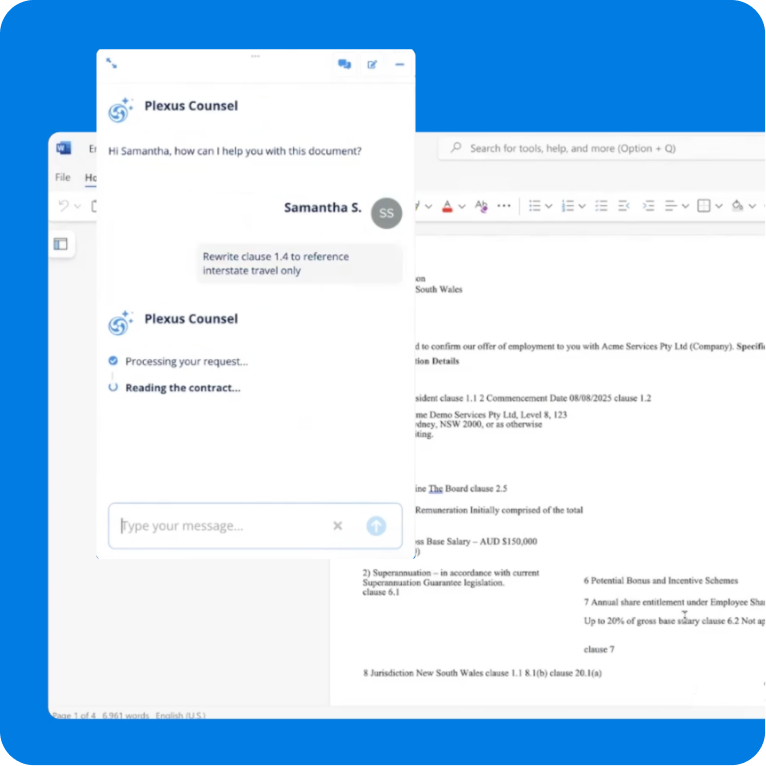
Plexus enables legal and marketing teams to centralise trade promotion terms and conditions, standardise templates aligned with NSW and national compliance requirements, and track authority status, including expiry dates and coverage periods in a single system. Rather than relying on email chains or shared drives, teams access a single source of truth for every promotion's compliance status. Learn more about Plexus trade promotion compliance capabilities.
Audit trail & reporting visibility
Every approval, amendment, notification and record keeping event is logged within the platform, creating a defensible audit trail. This is critical for organisations subject to regulatory enquiry or internal governance review. Legal teams gain real-time visibility across all active and completed promotions, without chasing status updates from marketing. Explore Plexus promotion compliance software.
Cross-functional collaboration controls
Plexus supports structured workflows that bring legal, marketing and operations teams together on a single platform. Role-based access, automated approval routing and version-controlled documentation eliminate the compliance gaps that emerge when teams work across disconnected tools. Consistent contest eligibility requirements and promotion terms are enforced at the point of creation, not reviewed retrospectively after launch.
Decision framework: do you need a standalone process or legal operations platform?
|
Factor
|
Manual Compliance
|
External Legal Advisory
|
AI-Powered Legal Operating System
|
|
Cost
|
Low upfront, high time cost
|
High per-engagement fees
|
Predictable, scalable investment
|
|
Speed
|
Slow — dependent on individual availability
|
Variable
|
Fast — automated workflows and templates
|
|
Scalability
|
Poor — breaks down at volume
|
Limited — cost-prohibitive at scale
|
High — designed for multiple promotions
|
|
Audit visibility
|
Low — fragmented records
|
Moderate — external files
|
High — centralised, real-time
|
|
Cross-functional collaboration
|
Difficult — email-based
|
Reactive — not embedded in workflow
|
Built-in — legal and marketing aligned
|
|
Compliance risk
|
High — manual error prone
|
Moderate — advisory only
|
Low — systematic controls and tracking
|
|
Best for
|
Very occasional, low-stakes promotions
|
One-off complex queries
|
Enterprise teams running ongoing campaigns
|
For organisations running multiple promotions per year across multiple states, the case for a legal operations platform is clear. The compliance risk, time cost and audit exposure of manual processes compound quickly at enterprise scale.
Pricing & budget analysis
Direct costs (permit fees & administration)
ACT permit fees are calculated based on the total prize value of the promotion. For current fee schedules, consult the ACT Gambling and Racing Commission directly, fees are subject to change and are confirmed at the time of application. In addition to ACT fees, businesses running national promotions should budget for permit fees in NSW, QLD, and SA, which are each calculated separately based on the total prize pool and applicable state fee schedules.
Administration costs include the time required to draft compliant terms and conditions, complete application forms, correspond with regulators, and manage any required amendments to terms before approval.
Hidden costs (legal time, risk exposure, rework)
The less visible costs of trade promotion compliance include the legal team time spent reviewing and approving each promotion, managing multi-state permit applications simultaneously, and resolving issues that arise from non-compliant terms or missed permit requirements. Rework costs, amending terms, resubmitting applications, updating advertising materials can significantly exceed the initial permit fee when promotions are not structured correctly from the outset.
For enterprise organisations running dozens of promotions per year, the cumulative cost of managing compliance manually across spreadsheets, email, and disconnected systems is substantial. Investing in operational infrastructure that automates and centralises this work delivers measurable productivity gains and reduces legal risk exposure.
Simplify NSW trade promotion compliance with Plexus
Double your legal team's impact without extra headcount
Managing trade promotion compliance across marketing, legal and operations teams is complex, especially for enterprise organisations running multiple campaigns simultaneously across New South Wales and other Australian jurisdictions. The compliance risk is real, the administrative burden is high, and the cost of getting it wrong extends well beyond regulatory fines.
Plexus is the AI-powered legal operating system built for exactly this challenge. Our platform centralises trade promotion terms, automates approval workflows, tracks authority status and creates defensible audit trails, so your legal team can run more promotions, with less risk, in less time.
All legal work. One AI-powered platform. From community gaming authority tracking to cross-functional collaboration controls, Plexus gives your team the infrastructure to scale compliance without scaling headcount.
ACT Trade Promotions | Trade Promotions Guide | Explore Plexus Trade Promotion Compliance | View Promotion Compliance Software |

.svg)